
A picture of the last important meeting you were in. Now retrace your steps and remember, word for word what really was agreed to.
Hard, right? You’re not alone. At this point, almost everything said in meetings dies there by Friday (50% of professionals sit through hundreds a year). There are three people that remember decisions in different ways. Single action items are buried in half-done notes of some kind. Remember that really good idea we had on Tuesday at standup? Is it really something that no one can recreate by Thursday?
The solution for firms that run the tightest, and it is not another note-taking app. They transcribe their meetings. Every word, record high-searchable for-ever. Why This Works, Where It Matters Most and How to Do it Right.
Why Bother? The Benefits
Like this: The obvious one first – a single source of truth. If the entire conversation is on paper, “that’s not what we agreed” isn’t an argument anymore – it’s a thirty-second search. Believe it or not that’s largely how so many projects fail: one person walked out of a room and the other with different meeting in their head.
Then there’s attention. Observe who is assigned to take notes in your next meeting. They’re typing, not thinking. With transcription being made available, everyone gets their brain back since the record is kept for them!
Purchase Search may be the hidden dumpster fire. So what did the client actually say about budget in March? What objections arose when it was done with this vendor last time? That’s a keyword search and not a week of networking hoping someone can recall.
Oh, and some people seldom mention transcripts make meetings truly accessible to deaf and hard-of-hearing teammates; they’re a crutch for everyone on the team working in their second language; they also allow whoever misses the call – 10 minutes of reading as opposed to an hour playback at 1.5x speed!
In Which Transcripts Make Their Case
Not every meeting should be subjected to this. These do.
“Board meetings.” Minutes are legally binding and a literal written record gives your corporate secretary something to sink his teeth into. You’ll be extremely thankful the record exists should a decision ever read out, years down the road.
“Client calls.” Requirements, promises, scope. When everything is captured verbatim, both parties are protected and each call can be reference material for the entire account team (which might have different people on it next year).
*HR conversations. Also watch the 17 youngest lawyers to watch Special having with: * disciplinary affairs and investigations. This is the type of exchange where “I never said that” can get very expensive, and a written record protects everyone in attendance.
*Earnings calls. The article subtitle should be: *You must have word-for-word records of public statement – no exceptions. Your IR team will mine them for quotes, so compliance needs them.
**All-hands. Strategy that is not explained when it reaches the people who happened to be there. Transcription, it goes with every hire you make next quarter as well.
**Research interviews. The bottom line is: customer discovery and expert interviews only pay when you can analyse what people said. And you can’t analyse audio. You analyse text.
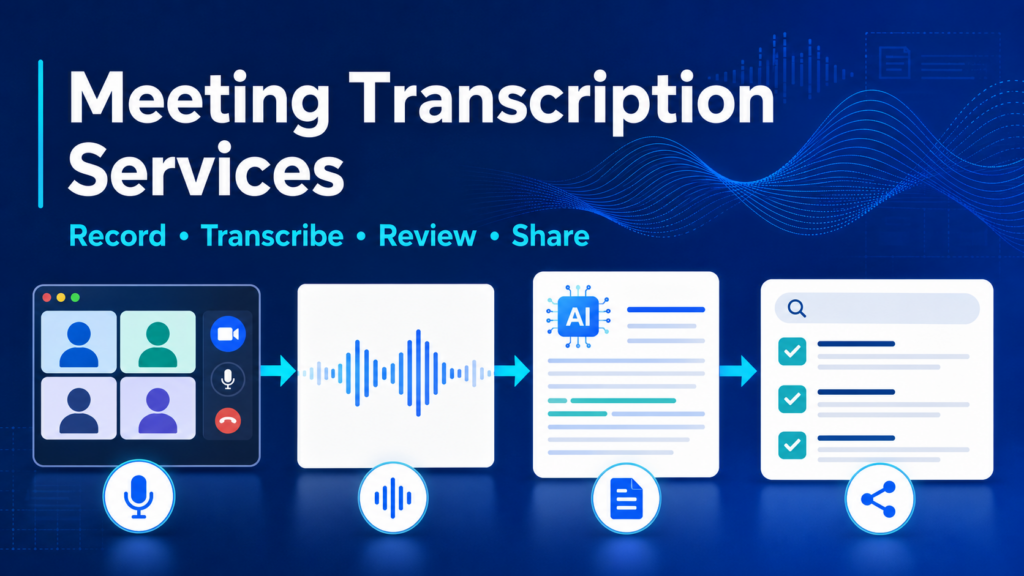
How to Do It Right
*Start with the audio. * This one is not glamorous but dictates everything else that falls downstream of it. Use a proper recording setup or your meeting platforms native recorder, get microphones close on people who are talking and politely enforce one-speaker-at-a-time. One minute here saves ten in the transcript.
**Ask before you record. Do note, recording laws differ massively across the globe and that in some areas it’s not merely your own before consenting to record. You make a habit out of announcing it at the beginning of every meeting. Asking – No one has ever gotten burned doing this.
**Align the tool with the stakes. The naked truth is that automatic transcription works for your Tuesday team sync. However, board rooms and client commitments are wracked with crosstalk, hearsay and jargon – the exact situation in which automation fails; where it is vital that you do not mis-transcribe. If the meeting is a permanent record, then it should be handled by a trained human.
Choose your format before you buy. Verbatim, on the other hand, captures all of it – ums and false starts included: just what you need for a legal or HR context. Intelligent Verbatim edits it up for business people. Timestamps and speaker labels transform a wall of text into something that can be navigated. These are small decisions, but those that you kind of hate to reverse.
“Guard the transcripts.” Think about it: a meeting archive contains your most sensitive information, all in a searchable format. Store it like you store contracts: work with transcription providers who will show you the particulars – rigorously encrypted transfer, signed NDAs in place and a direct answer as to exactly who handles your files!
“Make it a habit. “You are synced to your meetings that has been transcribed for ease of use. This is something else again: A digitally transcribes meeting culture – a growing database of every decision made by your company, and the reasons you reached those decisions. That compounds.
The Bottom Line
Meetings are the audible breath of your business. That transcription stops those thoughts from dissipating. Just hit the heavy hitters first, do the basics and to be quite honest it pays for itself every time you resolve a “who agreed what” dispute on day 1.
This is the work we have been doing at American Transcription Services since 1999. Human all the way through, conducted by people who know their stuff with a final review before anything ships. If U.S. corporate, legal and academic teams need a record they can rely on – they turn to us.
Ever wonder what your meetings sounds like in print? Send us a sample file for your transcription free of charge. You have been warned – Once you search a transcript rather than scrub through an audio or video recording, you’ll never go back.